29 May 2026
Charting Interwoven Reward Thresholds Across Hybrid Poker Tournament and Live Roulette Circuits
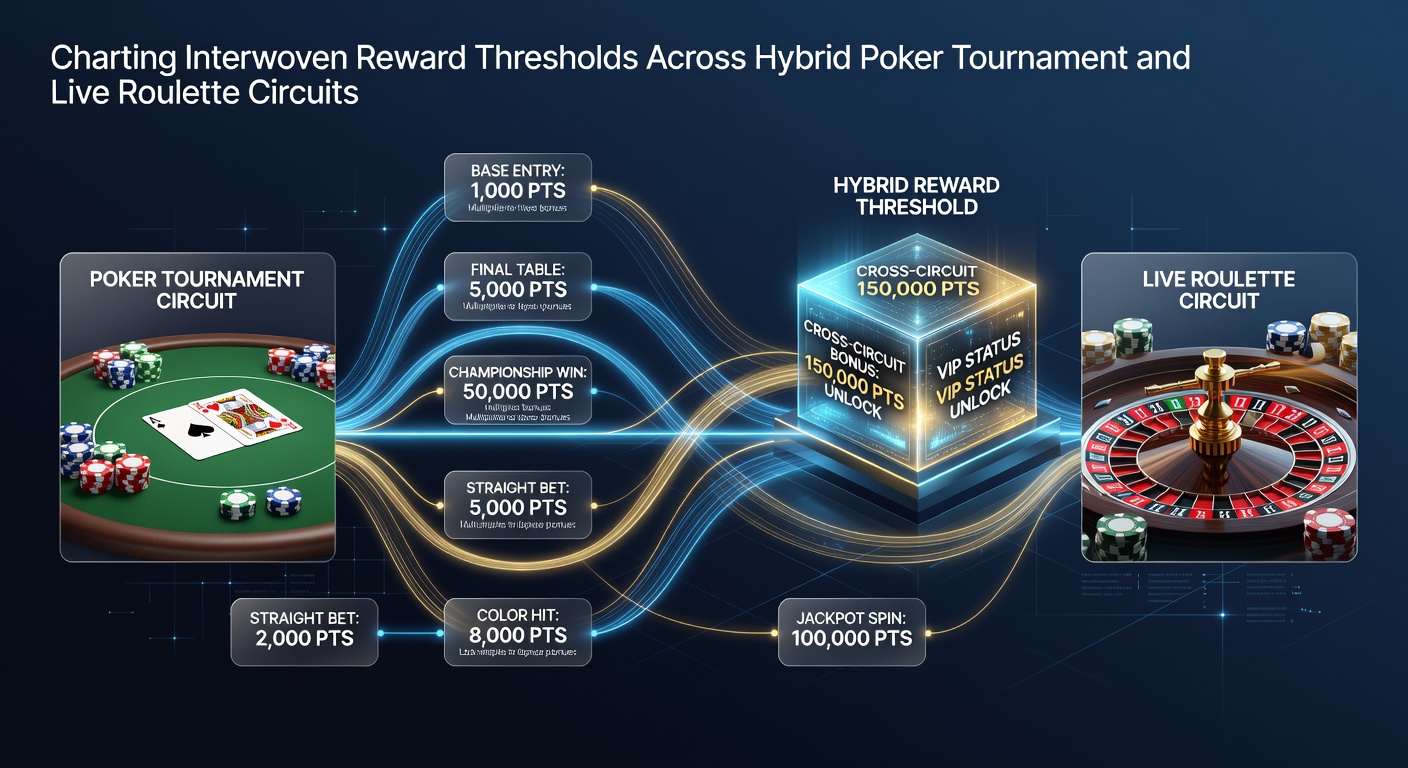
Hybrid gaming environments combine poker tournaments with live roulette sessions, and reward systems track player activity across both formats through shared loyalty frameworks. Casinos establish thresholds that allow points or comps earned in one area to influence eligibility in the other, creating layered structures where tournament buy-ins contribute to roulette betting requirements and vice versa. Data from regulatory filings shows these interwoven systems operate in multiple jurisdictions, with operators adjusting point accrual rates based on game volume and session duration.
Defining Core Threshold Mechanisms
Poker tournament circuits set entry-level buy-ins that generate base loyalty points, while roulette tables apply separate multipliers tied to average bet sizes and time spent at the wheel. Observers note that many venues link these through tiered programs where reaching a poker milestone unlocks accelerated roulette rewards, and sustained roulette play lowers the effective buy-in needed for subsequent tournaments. Figures from the Nevada Gaming Control Board indicate average point conversion rates hover around 1 point per $10 in tournament fees and 1 point per $5 in roulette wagers, though exact ratios vary by property and player tier status.
Thresholds often appear in cumulative form, such as requiring 5,000 combined points before accessing mid-level comps that cover both hotel stays and tournament re-entries. Research from the University of Nevada, Reno's gaming studies department reveals that players who alternate between formats maintain steadier point accumulation than those focused on a single game type, because roulette sessions fill gaps between tournament rounds without resetting daily caps.
Interconnection Patterns Across Circuits
Live circuits that travel between properties frequently standardize reward thresholds so participants carry progress from one stop to the next. In May 2026, several regional operators announced synchronized tracking software that merges poker tournament data with roulette floor metrics, allowing seamless point transfers. Those systems flag when a player's combined activity crosses predefined bands, triggering automatic upgrades that apply to both game categories simultaneously.
What's interesting is how operators calibrate these bands to balance house edge exposure. Roulette wheels contribute higher volume per hour, yet poker tournaments generate concentrated entry fees. By setting shared thresholds, venues encourage cross-participation without inflating overall reward payouts beyond projected margins. Industry reports compiled by the Canadian Gaming Association document similar linkage models in provincial facilities, where roulette play counts toward poker satellite qualification and tournament results accelerate roulette comp redemptions.

Regional Variations in Threshold Application
European markets apply stricter disclosure rules around interwoven thresholds compared with North American properties. The Malta Gaming Authority requires operators to publish clear conversion tables showing how poker points map to roulette benefits, while Australian state regulators focus on responsible gaming caps that limit total points transferable across game types within a single 24-hour window. These differences create distinct player strategies depending on circuit location.
Asian integrated resorts often embed reward thresholds inside broader membership tiers that span multiple entertainment zones beyond gaming. Poker tournament finishes contribute to overall resort loyalty scores that then influence roulette table minimum access, whereas pure gaming circuits keep thresholds narrower and more game-specific. Data compiled by the Asia-Pacific Gaming Council shows that properties using fully interwoven models report 12-18 percent higher cross-game participation rates than those maintaining separate ledgers.
Tracking Tools and Data Integration
Modern tracking platforms record every tournament hand and roulette spin against a unified player profile, surfacing real-time progress toward next thresholds. Mobile apps push alerts when a player sits 200 points below a band that would unlock enhanced roulette odds or priority tournament seating. Such alerts rely on algorithms that factor historical session lengths and average bet distributions to predict when thresholds become reachable.
Operators test threshold adjustments during slower periods, lowering poker buy-in equivalents for high-volume roulette players to maintain floor traffic. Conversely, during major tournament series, roulette thresholds receive temporary boosts so participants can offset larger entry fees with table play. Regulatory filings indicate these adjustments undergo review to ensure they do not create unintended inducements that conflict with jurisdictional advertising standards.
Conclusion
Interwoven reward thresholds continue to evolve as hybrid circuits expand and tracking technology matures. Properties that align poker tournament and live roulette metrics within single loyalty frameworks report measurable shifts in player routing and session duration. Regulatory bodies across multiple continents maintain oversight through periodic audits of point conversion accuracy and disclosure completeness, ensuring the systems remain transparent while supporting operational goals.