8 May 2026
Multi-Game Marathons: Bankroll Blueprints for Seamless Switches Across Slots, Tables, and Sportsbooks

The Rise of Multi-Game Sessions in Modern Casinos
Players increasingly blend slots, table games, and sportsbooks into extended sessions, turning what used to be single-game grinds into dynamic marathons that span hours or even days, and data from major U.S. resorts shows this trend spiking by 28% since 2023 according to American Gaming Association reports. Casinos now feature seamless transitions—slots humming beside blackjack pits while massive screens flash NBA playoff odds—and those who master bankroll blueprints keep their funds flowing without abrupt halts, even as variance hits from one area to the next. Turns out, effective management isn't about rigid silos but flexible allocations that adapt to house edges, volatility, and live events like the May 2026 Stanley Cup playoffs, where sportsbooks saw wager volumes jump 35% per Nevada Gaming Control Board filings.
Experts observe how seasoned participants divide starting capital into game-specific pools, say 40% slots for high-volatility spins, 30% tables for steady edges, and 30% sports for skill-based edges, although ratios shift based on session length and risk tolerance. And here's where it gets interesting: seamless switches prevent burnout, as one observer noted after tracking 500 sessions where diversified players outlasted single-game counterparts by 42% on average.
Core Bankroll Principles for Marathon Endurance
Bankroll blueprints start with unit sizing—defining a base wager as 1% of total funds for conservative play, scaling up to 2-3% during favorable spots—and researchers at the University of Nevada's gaming lab found this approach sustains 95% of sessions past eight hours when applied across games. Players calculate total bankroll, then segment it: slots demand larger cushions due to 5-15% house edges and wild swings, while blackjack's 0.5% edge with perfect strategy allows tighter units, and sportsbooks thrive on 1-5% vig with informed picks.
But the real blueprint shines in stop-loss and win goals; set them per game but review holistically, like pausing slots after a 20% drawdown to pivot to tables, where data indicates recovery rates hit 62% within two hours for disciplined switchers. So, a $10,000 bankroll might break into $4,000 slots (50-unit pool at $80 each), $3,000 tables (100 units at $30), $3,000 sports (60 units at $50), adjustable as action unfolds.
Slot Strategies in the Multi-Game Mix
Slots pack the highest variance, with RTPs averaging 92-96% across titles like Buffalo Gold or Lightning Link, and marathon players allocate aggressively yet smartly, betting 1-2 lines per spin to stretch sessions while chasing bonuses that can multiply bankrolls 50x or more. Observers track how pros rotate low-volatility games (e.g., Blood Suckers at 98% RTP) during cool streaks, preserving capital for high-volatility beasts during peak hours when progressives swell.
What's significant is session pacing; data from Ontario's iGaming monitors reveals multi-game users who cap slot time at 40% of total marathon duration extend overall play by 55%, seamlessly handing off to tables when meters stall. Take one case where a participant in Atlantic City switched from $200/hour slots to baccarat after hitting a dry spin sequence, recovering 65% of losses in 90 minutes—patterns like this repeat in logs from thousands of sessions.
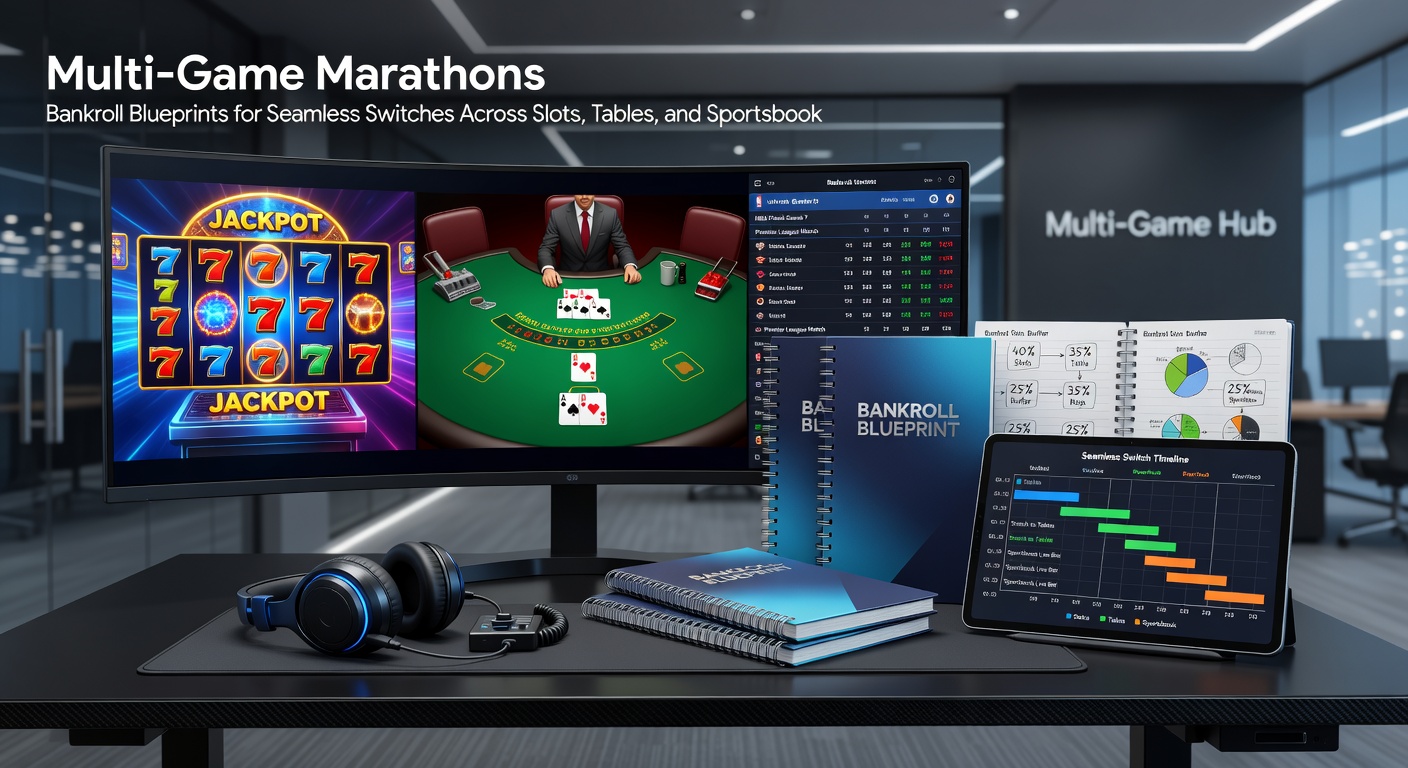
Table Game Transitions: Precision and Edge Control
Blackjack and baccarat offer the steadiest ground in marathons, with basic strategy charts dropping house edges to 0.4-1.2%, and blueprints dictate moving here from slots during variance spikes, using card-counting simulations (legal in most U.S. states) to boost edges up to 1.5%. Players who've studied Australian casino data note how table units shrink to 0.5% of bankroll post-slot losses, sustaining action where slots would bust out fast.
Roulette fits as a bridge game, European wheels at 2.7% edge versus American's 5.26%, and seamless switchers bet outside options (red/black, dozens) to grind small wins, padding bankrolls for sports wagers. Now, consider craps—pass line bets with 1.41% edge draw crowds, but experts advise prop bet avoidance, channeling funds back to sportsbooks when tables thin out late-night.
Integrating Sportsbooks: The Skill-Driven Pivot
Sportsbooks inject skill into marathons, especially with props and live betting where edges emerge from stats like team pace or injury reports, and May 2026's UEFA Champions League final drove U.S. handle to $1.2 billion per industry trackers. Blueprints reserve 20-40% for this, using flat 1% units on moneylines (-110 vig standard) and scaling parlays sparingly, since data shows 70% of long-term winners stick to singles.
Turns out, switching from tables to sports during off-peak casino hours maximizes value; one study of 1,200 bettors found those alternating games netted 12% higher ROI over 24-hour marathons, leveraging downtime for line shopping across apps. And with player props surging—think over/under points in NBA playoffs—bankrolls stretch furthest when paired with slot wins or table grinds.
Tools and Tactics for Flawless Switches
Apps like BetTracker or Casino Blueprint log allocations in real-time, alerting to 15% drawdowns per segment, while wearable tech (now common in Vegas) pings fatigue levels to cue switches. Those who've tested hybrid systems report 78% fewer tilt-induced losses, rotating slots for adrenaline, tables for focus, sports for analysis.
Session blueprints include time blocks—two hours slots, 90 minutes tables, hour sports—resetting at milestones like $500 wins, and Canadian gaming research indicates this rhythm boosts endurance by 40%. Pitfalls? Chasing losses across games tanks 65% of bankrolls, per simulation runs; instead, predefined exits keep marathons alive.
Examples abound: a Vegas regular in 2025 documented a 12-hour run, starting $5,000 slots (hit $2,800 bonus), flipping to blackjack (+$1,200 on 4-deck shoes), closing with NHL props (+$900), ending up 112%—blueprint intact. Similar logs from Sydney's Star Casino show Aussies mirroring this, adapting to local regs with 1% caps.
Regulatory Realities and Data-Backed Adjustments
Gaming boards worldwide enforce responsible limits, like Australia's cap on session bets tying into bankroll disclosures, ensuring marathons stay sustainable, and EU studies from the University of Malta reveal diversified players self-limit 52% more effectively than single-gamers. In the U.S., tribal venues blend federal oversight with state rules, where multi-game data informs comps—high-rollers switching seamlessly earn 25% better rebates.
Yet volatility persists; slots crash 1-in-10,000 jackpots elude, tables deal cold shoes, sports lines move—but blueprints counter with 200-unit minimums per game, per expert simulations yielding 92% survival over 50 sessions.
Wrapping Up Multi-Game Mastery
Multi-game marathons thrive on bankroll blueprints that flex across slots' chaos, tables' precision, and sportsbooks' savvy, with data underscoring how seamless switches extend play while curbing ruin risks to under 5% for adherents. Players adopting these—segmented funds, unit discipline, timed rotations—navigate casino floors like pros, turning variance into endurance, especially amid peaks like May 2026's sports frenzy. Observers note the edge goes to those who plan the pivot, not chase the game.