27 May 2026
Tracing the Evolution of Welcome Incentives in Newly Regulated Digital Casino Markets
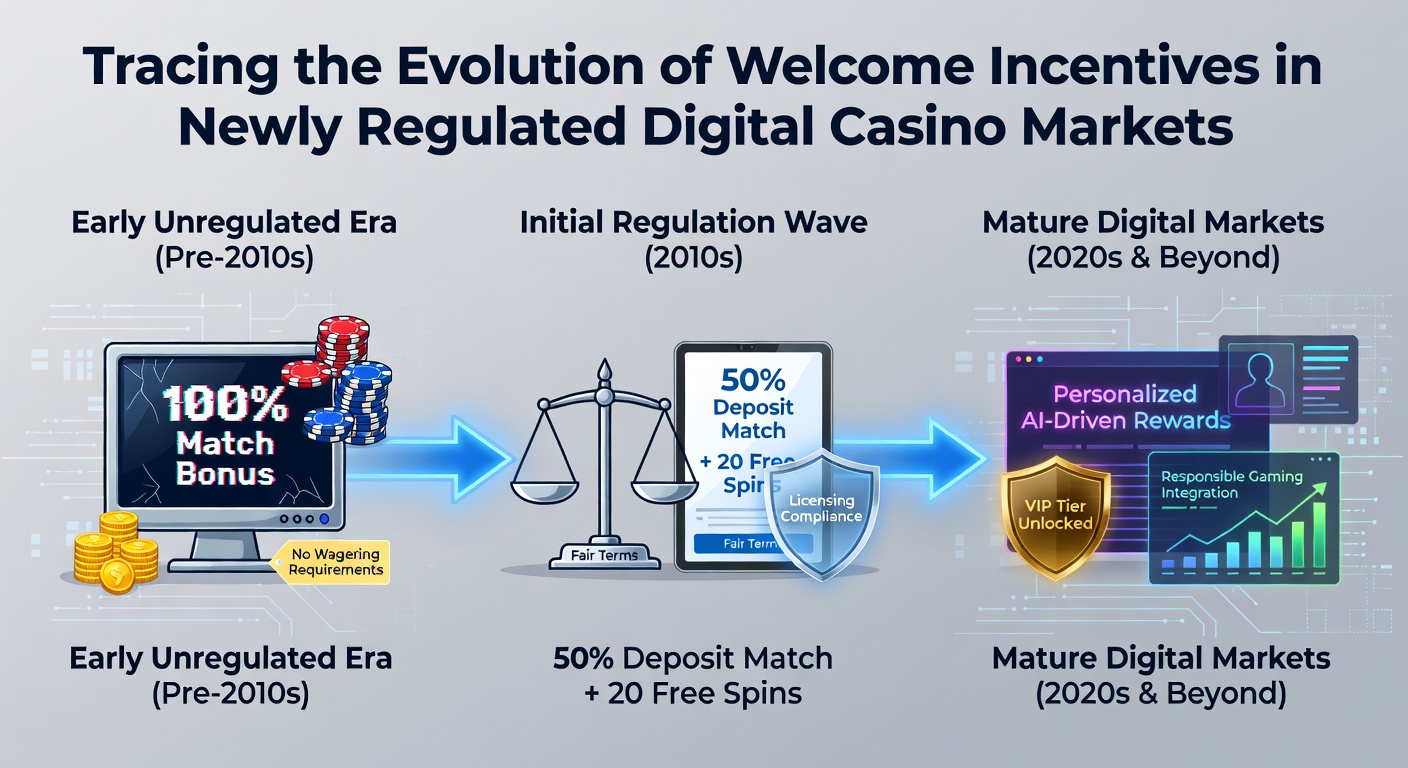
Digital casino markets that gained regulation in recent years have seen welcome incentives shift from simple deposit matches to layered offers that incorporate free spins, cashback tiers, and loyalty credits, all while meeting stricter compliance standards set by local authorities. Operators in these jurisdictions adjusted their approaches as licensing frameworks matured, and data from government reports shows measurable changes in how these promotions reached new users.
Initial Structures in Freshly Opened Markets
Early welcome packages in newly regulated spaces often centered on straightforward deposit bonuses that ranged from 100 to 200 percent of the first deposit, accompanied by wagering requirements that sometimes exceeded 30 times the bonus amount. Regulators in places such as certain Canadian provinces and Latin American countries introduced licensing rounds between 2018 and 2022, and operators responded by testing these formats to attract players who previously used offshore sites. Figures from the Ontario Lottery and Gaming Corporation indicated that sign-up volumes rose sharply once regulated platforms launched, yet many offers still carried high playthrough thresholds that limited actual player retention.
Regulatory Pressures Reshape Bonus Design
As oversight bodies enforced rules on responsible gambling messaging and bonus transparency, welcome incentives began to include mandatory disclosures about wagering terms and maximum win caps. Markets in Australia and several European Union member states outside the United Kingdom implemented guidelines that required operators to display bonus values clearly during registration, and this led to a decline in no-deposit offers that had previously dominated offshore promotions. Research published by the University of Nevada's International Gaming Institute documented how these disclosure rules correlated with lower complaint volumes related to misunderstood terms in the first two years after enforcement.
Adaptations Across Different Regions
North American state-by-state rollouts produced varied welcome structures, with New Jersey and Pennsylvania platforms favoring matched deposits plus free spin bundles tied to specific slot titles, whereas Michigan operators introduced hybrid offers that combined casino credits with sportsbook bonuses. In contrast, several Australian states emphasized cashback components within welcome packages after regulatory reviews highlighted player preference for reduced-risk incentives. Data released by state gaming commissions showed that these regional differences produced distinct average bonus values, with East Coast markets offering higher initial matches while Midwest platforms leaned toward volume-based free play rewards.
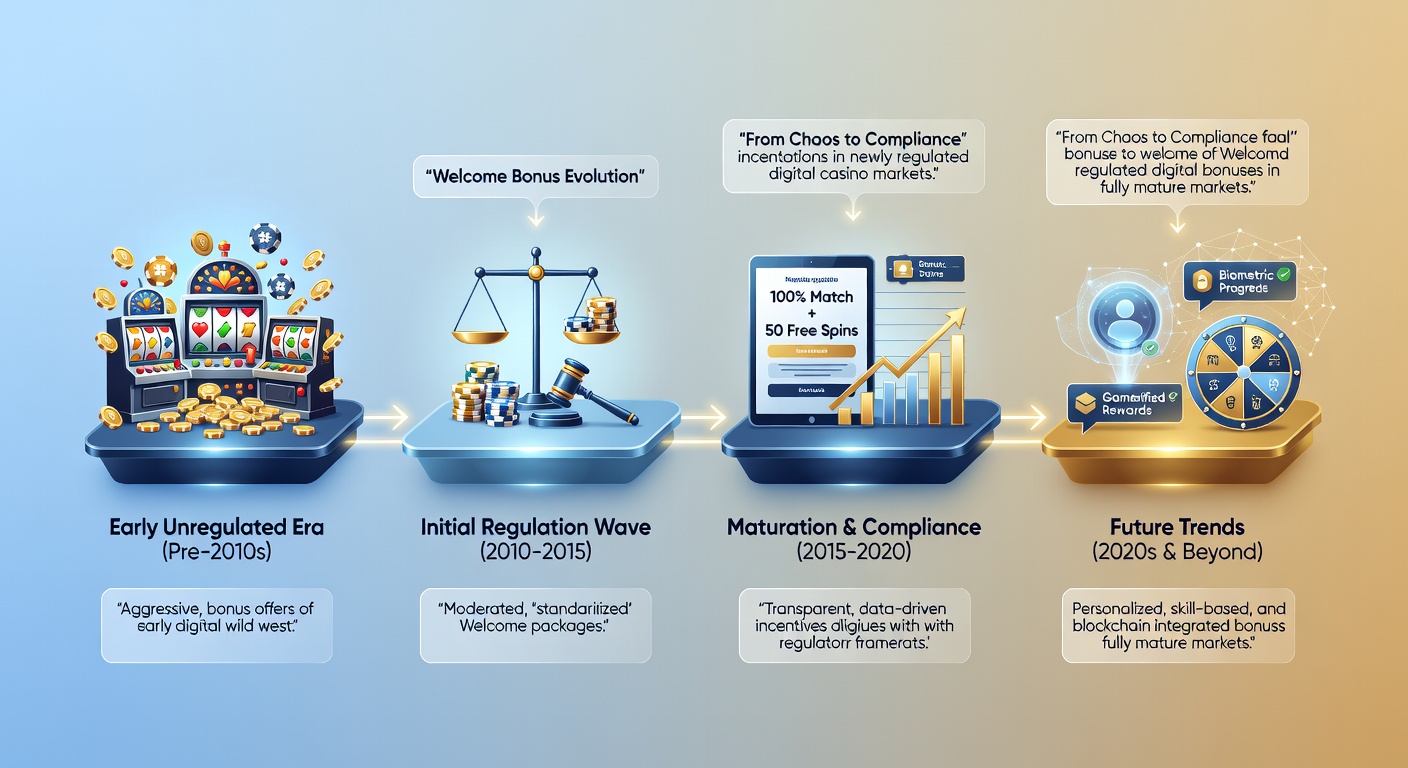
By May 2026, several jurisdictions that opened markets in 2023 and 2024 had already completed their first round of license renewals, and operators adjusted welcome incentives to include built-in responsible gaming tools such as deposit limits and session reminders. Reports from the Canadian Gaming Association noted that these integrated features appeared in over 70 percent of active welcome packages, reflecting requirements from provincial regulators who sought to balance commercial growth with consumer protection standards.
Technology and Personalization Enter the Picture
Platform providers introduced data-driven customization that allowed welcome offers to vary based on player location, preferred game type, and deposit method, and this trend accelerated once regulators permitted limited use of behavioral analytics under strict privacy rules. Markets in Scandinavia and parts of South America adopted these tools earlier than others, and industry statistics indicated that personalized free spin allocations improved first-week activity rates compared with uniform bonus structures. Observers from trade associations pointed out that such tailoring helped operators meet local advertising restrictions while still presenting competitive entry offers.
Conclusion
Welcome incentives in newly regulated digital casino markets have moved through distinct phases shaped by licensing conditions, consumer protection mandates, and technological capabilities. Regulatory updates through May 2026 continue to influence how operators structure these promotions, with emphasis on transparency and integrated safeguards becoming standard across multiple jurisdictions. Continued monitoring by government agencies and academic researchers will likely document further refinements as additional markets finalize their frameworks.